This post is a follow-up to my previous blog about Las Casas. I did not mention the part about the evening show they put on because it’s so great it deserves a spotlight all its own.
The Philippines, with its vibrant culture and rich heritage, boasts a dazzling array of native and folk dances. These rhythmic expressions have been passed down through generations, each telling a unique story and offering a glimpse into the Filipino spirit.
Some of the most beloved dances from the archipelago were performed by local students and out-of-school youth that night – and it was majestic, to say the least!
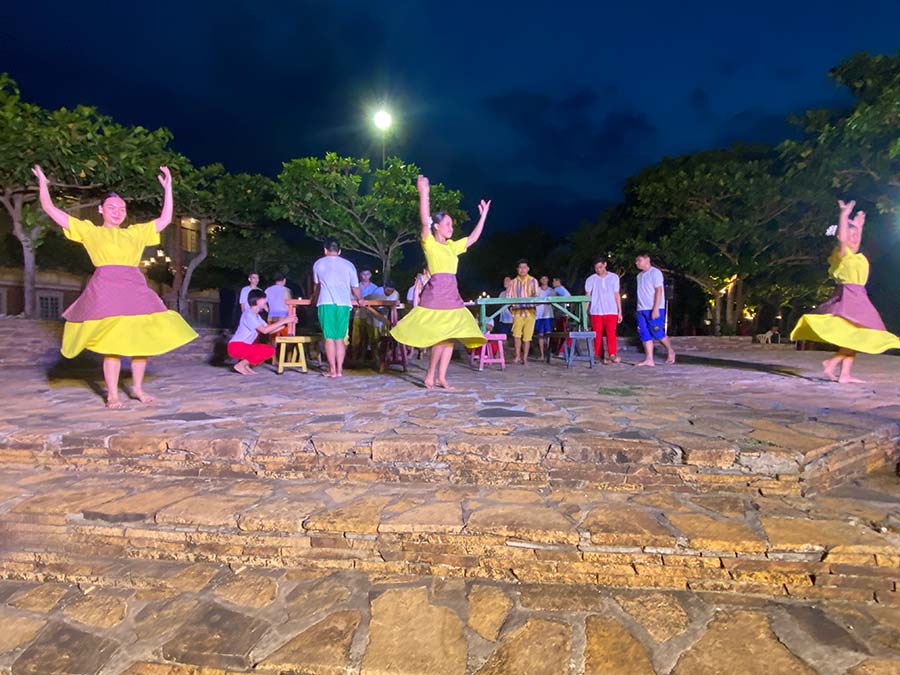

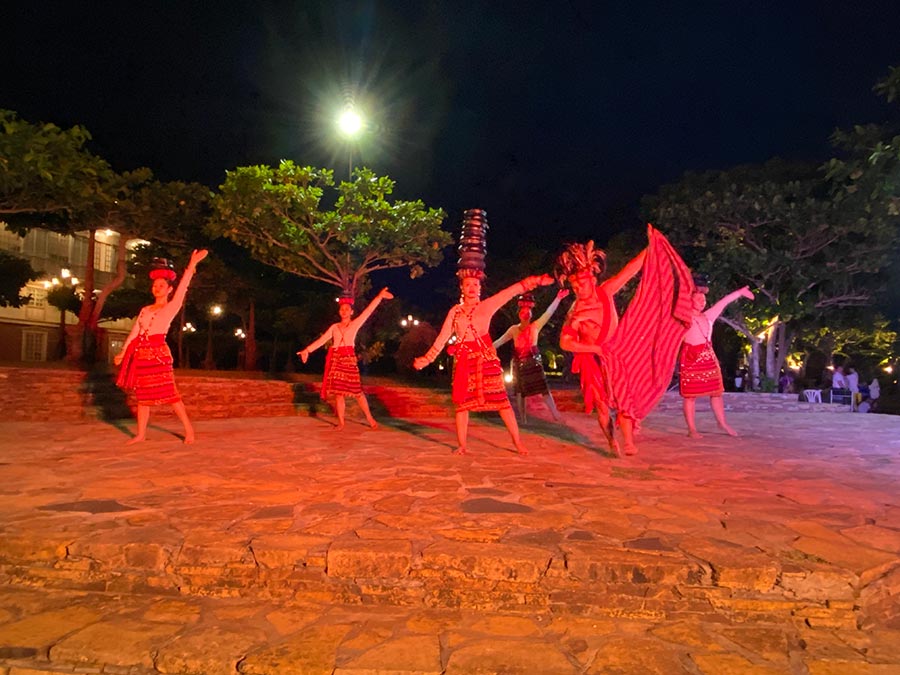
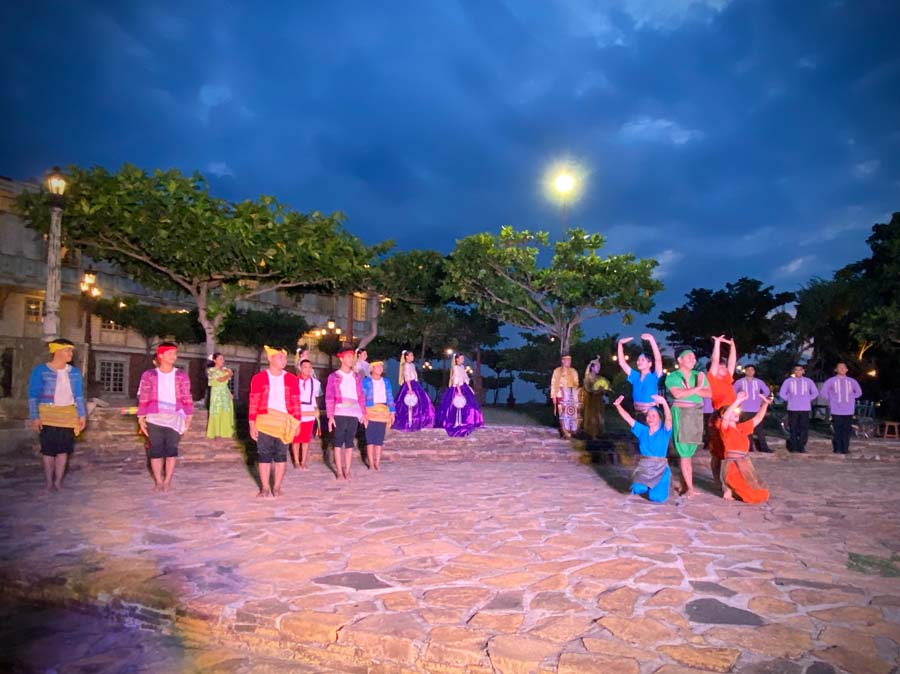

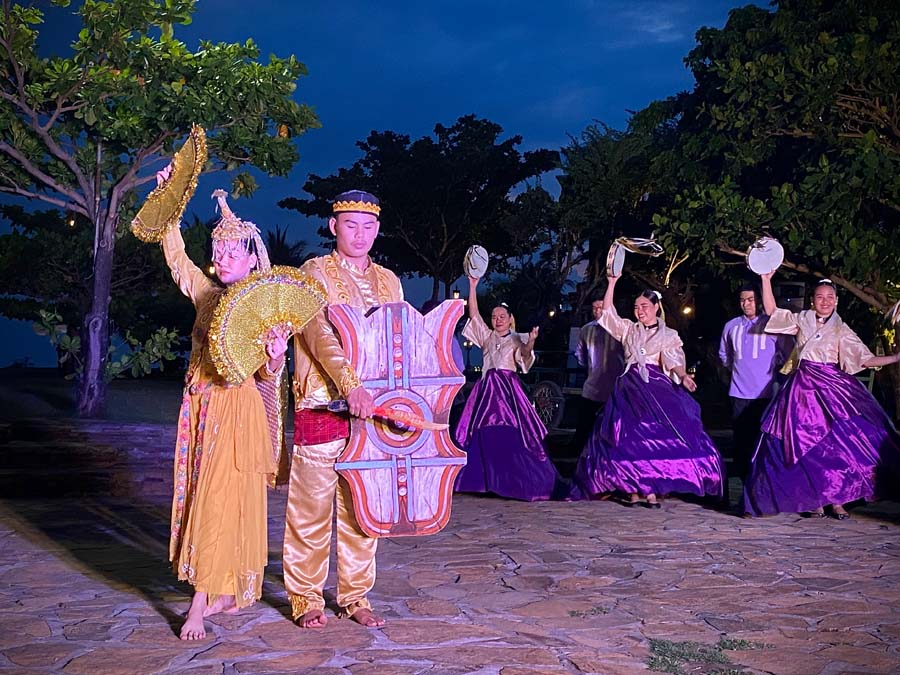

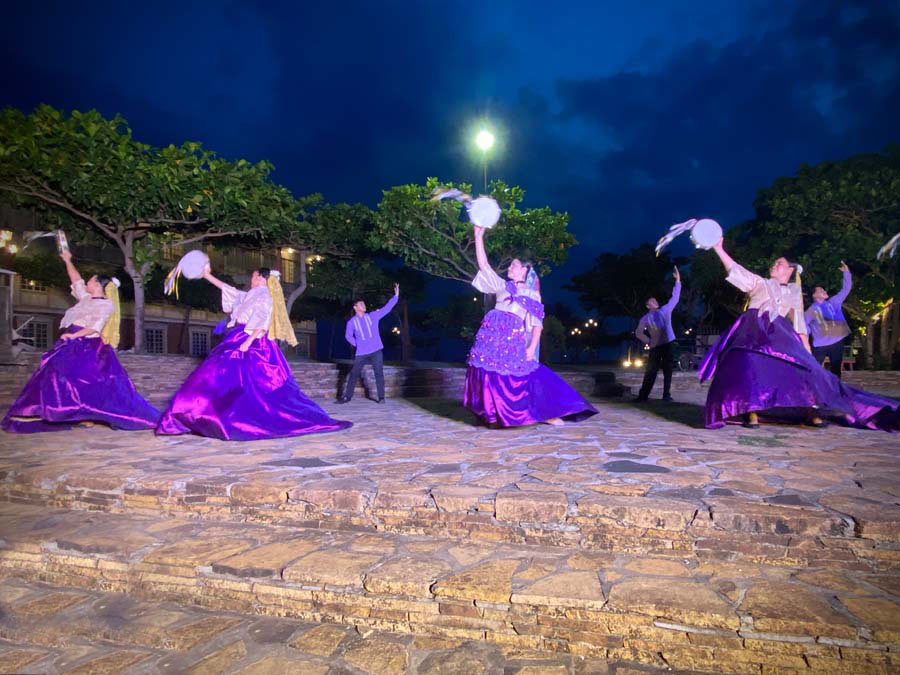

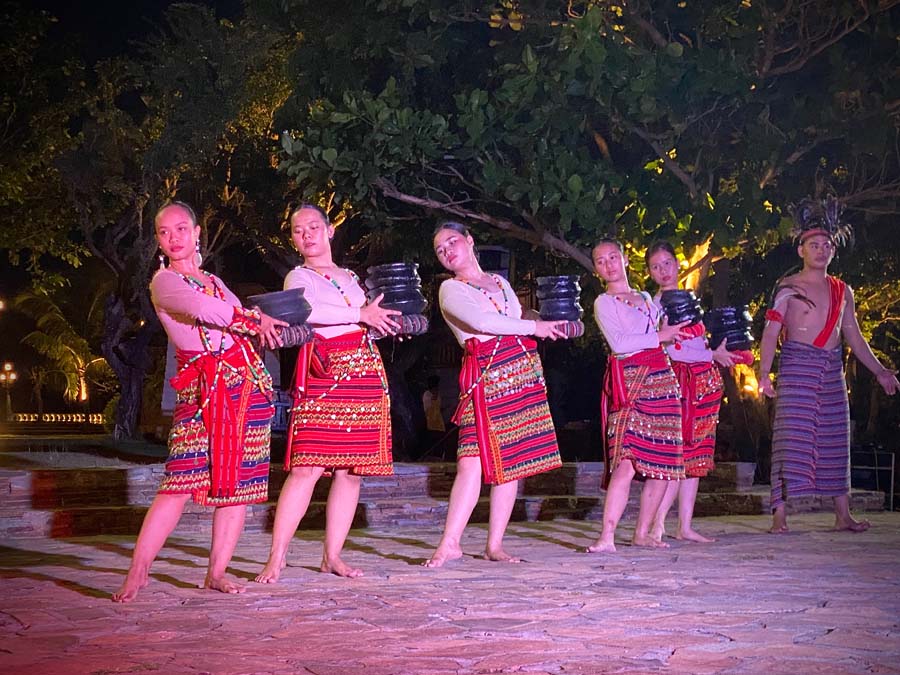
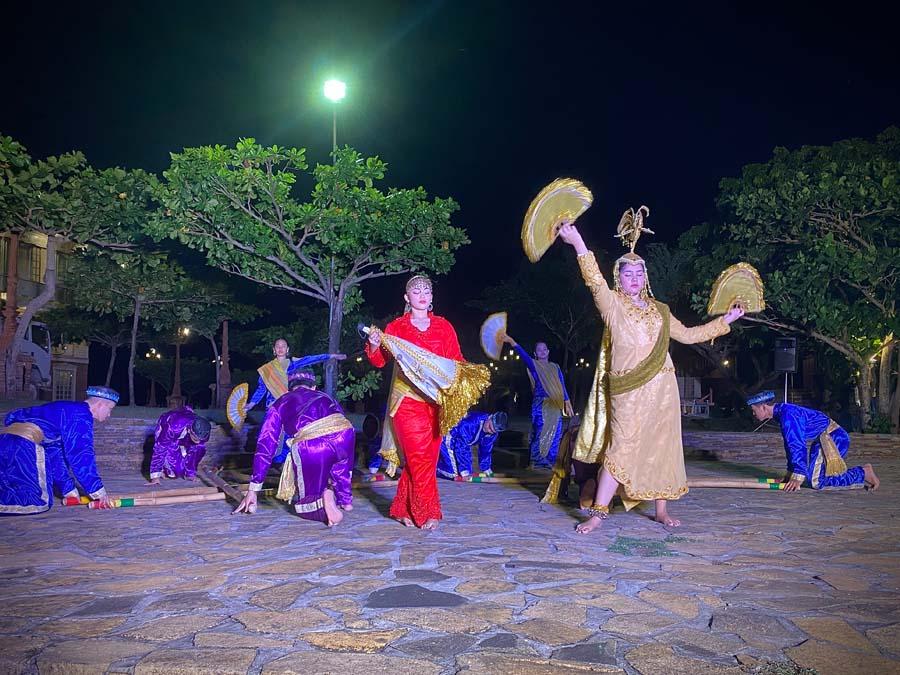

Tinikling is probably the most popular folk dance in the Philippines. Imagine bamboo poles rhythmically clashing together as dancers nimbly hop and weave between them.
Maglalatik originated from the Tagalogs and features warriors adorned with coconut shells strapped to their bodies. The rhythmic clashing of these shells creates a captivating beat, celebrating both strength and grace.
Cariñosa is a romantic dance about courtship. It showcases the elegance of traditional Philippine movements. Dancers gracefully sway, flirt, and exchange handkerchiefs, capturing the essence of love and longing.
Singkil is inspired by the epic tale of Princess Gandingan, It transports us to the Maranao culture. Dancers nimbly step over bamboo poles, symbolizing the princess’s escape from falling trees during an earthquake.
Hailing from Leyte, Kuratsa is a lively dance performed during celebrations. Couples twirl and sway, their footwork echoing the joyous rhythm of life.
Picture dancers balancing oil lamps on their heads and hands, creating mesmerizing patterns of light. That’s Pandanggo sa Ilaw. It pays homage to the grace and resilience of Filipino women.
Originating from the Kalinga tribe, Banga celebrates the strength of women who carry heavy water jars on their heads. The dancers mimic these movements, showcasing their endurance and resilience.
A Spanish-influenced dance, La Jota Moncadeña combines European flair with Filipino zest. It’s a lively waltz that captures the fusion of cultures.
Tayaw is an Igorot wedding dance and celebrates love and union. Dancers sway, their colorful attire reflecting the festive spirit of marriage.
From Batangas, Alitaptap imitates an insect that flies only at night, carrying a lamp. Dancers move gracefully, their steps echoing the mysterious beauty of the night.
Filipino folk dances seems more than just choreography to me. They’re truly a testament to the resilience, creativity, and unity of the Filipino people. They remind us that their culture is a living, breathing art form.
 Chris Alma José